Learn to die so you can learn to live
Once you accept that everything is temporary, you become less obsessed with controlling it all.

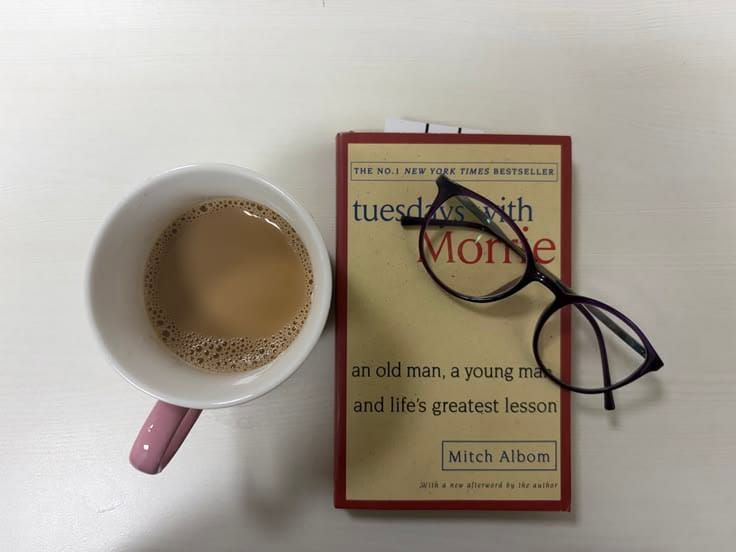
When I finished reading Tuesdays with Morrie by Mitch Albom, I had to sit in silence for a minute. This one line kept playing on loop in my head: “Learn to die so you can learn to live.”
It sounds super deep, almost like one of those quotes people put on a graphic even if they don’t fully get it. But if you actually let it sit with you, it hits differently. So, I sat with it. What does that even mean?!
The whole heart of the book is this call for us to slow down, be present, and actually live. Which, let’s be real, is true, but way easier said than done. Morrie just cuts right through the noise when he asks why we spend so much time chasing all these things, only to end up in the same place. We’re all going to die. So why not just accept that truth and start living every single day like it’s our last?
Morrie is not saying you should think about death all day. He is saying that death is the boundary that gives life its value. It didn’t help that I attended the funeral service of a beloved uncle to my husband; I kept pondering: what does “learn to die” actually mean?
Let’s break this down together. Imagine you genuinely knew you had only one week left to live; you would probably start asking different questions:
· Do I actually want to spend my evenings doing this?
· Why am I holding on to this resentment?
· Why am I so worried about what people think of me?
· Why am I postponing that thing that matters to me?
· Who do I really want to spend my time with?
· Is this career ambition actually important to me, or am I chasing something because everyone else is?
· What am I doing simply because I feel I should?
You wouldn’t necessarily quit your job, sell your house, and travel the world. You might actually do many of the same things, but you would probably do them differently. That’s the point.
I believe “Learning to die” is really learning to let go. If you accept that everything is temporary- your youth, your career, your marriage as it exists today, your parents, your friendships, your body, even this particular version of yourself- you become less obsessed with controlling everything. You learn that this moment will pass, a bad day will pass, an embarrassing mistake will pass, a beautiful season will pass, and eventually, life itself will pass. I think Morrie’s message is to say the knowledge of this can make you more present, rather than more afraid.
You stop saying: I’ll be happy when and begin asking: What is there to live today?” and I think this is where it becomes practical. You don’t have to start waking up every morning thinking, I could die today. Instead, you can use death as a filter
When something is bothering you, ask: Will this matter to me if I’m 60?
When you’re procrastinating something meaningful: If I had two years left, would I still keep postponing this?
When you’re spending time with someone you love: Am I actually here with this person, or am I mentally somewhere else?
When you’re consumed by comparison: If I knew my life was finite, would I really want to spend it measuring myself against this person?
When you’re holding a grudge: Is this worth using part of my limited life on? And perhaps the most important one: If my life isn’t guaranteed to be long, what makes it meaningful?
That question can completely change how you make decisions. And there’s one part of this philosophy I especially love: Learning to die doesn’t mean learning to care less about life. It means learning what is actually worth caring about.
If you enjoyed reading this, follow, share with someone, and subscribe for more.
Please comment with any thoughts or questions — I love interacting with my readers every day!
As always, thank you for being here and for being you. ❤